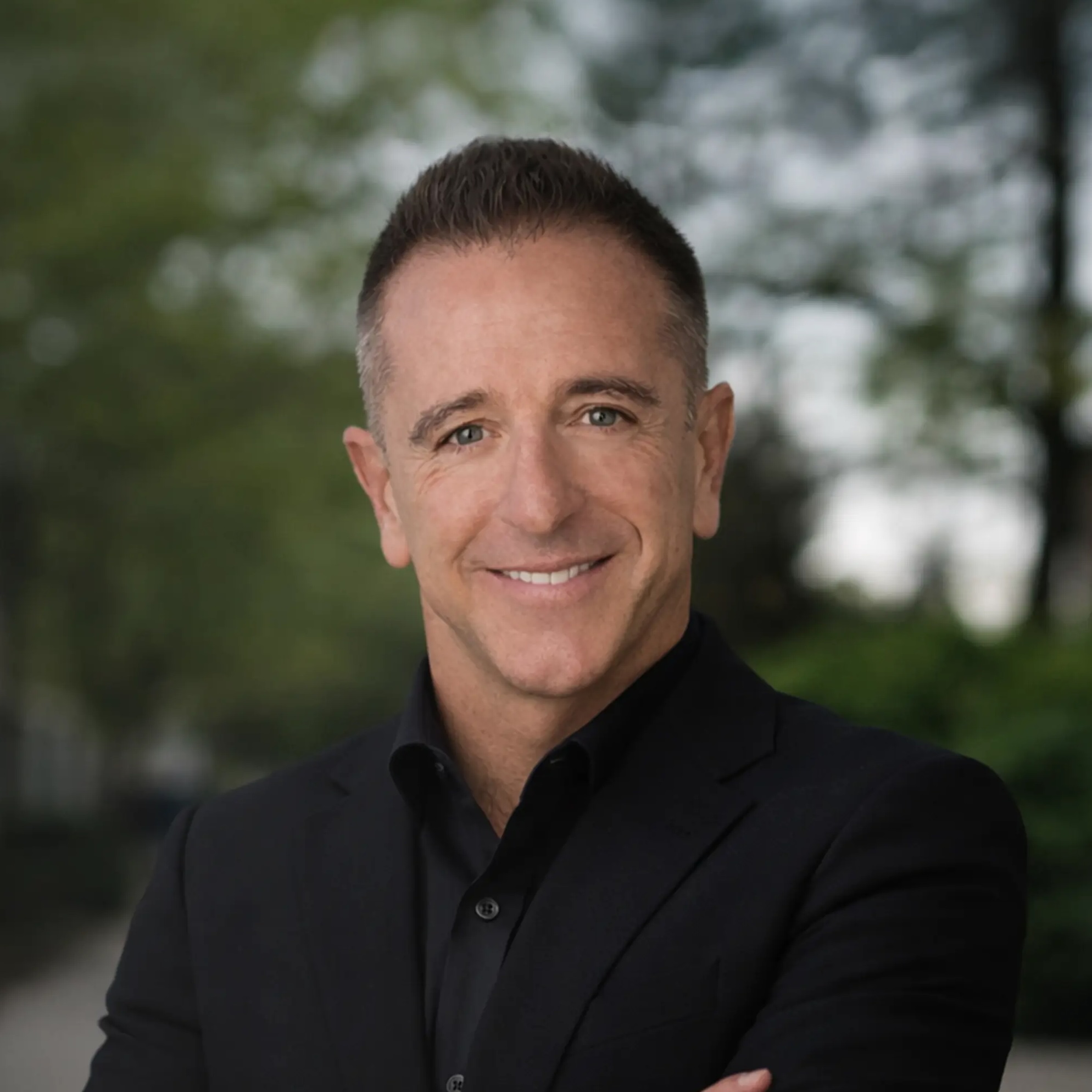
Dean Grey: I Learned to Read Danger Before I Learned to Read People
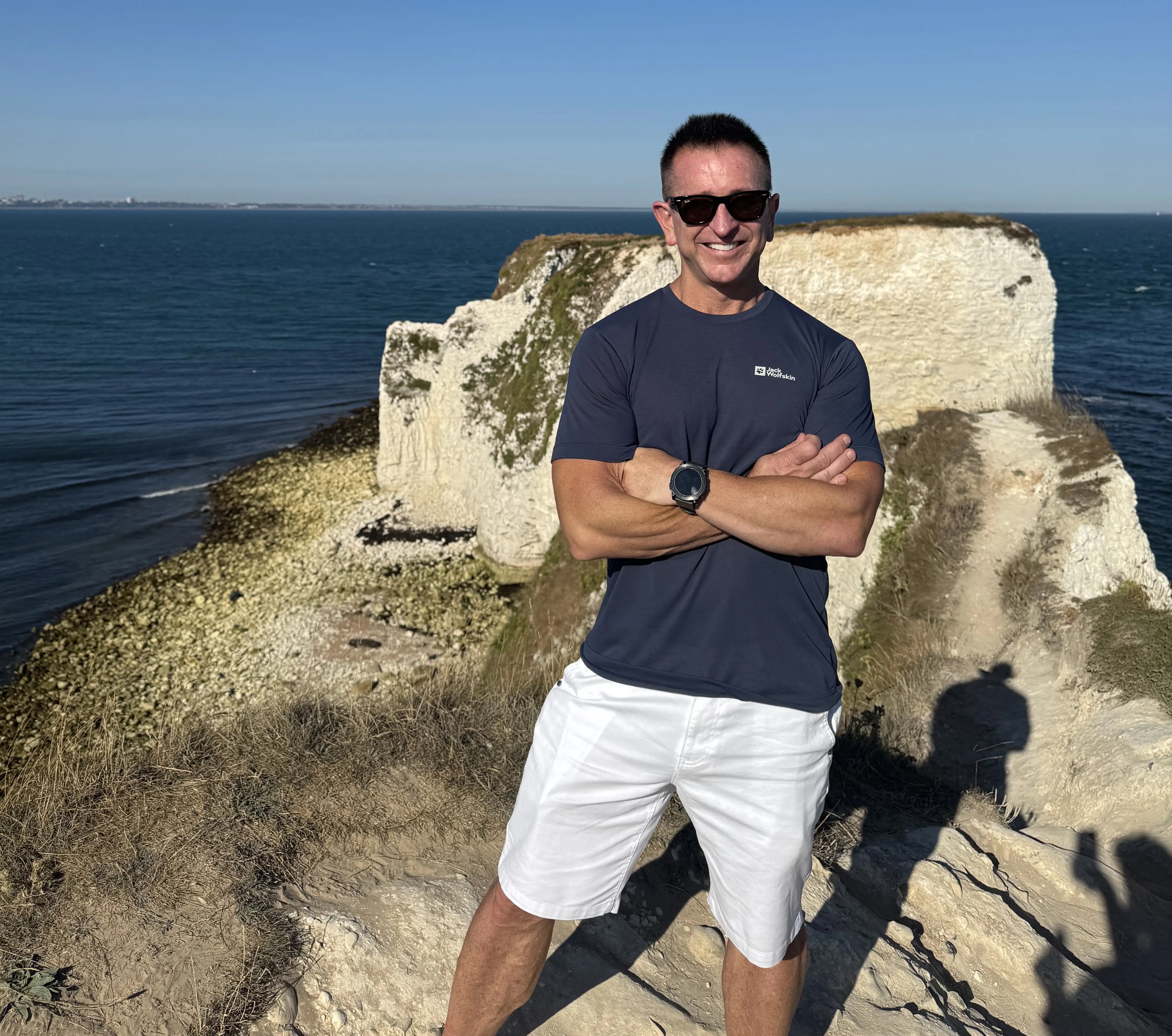
Before I Learned to Read People
My story does not begin with a camera, a stage, a patent or a technology company. It begins much earlier, in a childhood where reading a room was not a professional skill. It was part of staying oriented. My mother had been a Playboy Bunny when she was young. She met my father in college. He became a nuclear physicist. The life that followed with my mother moved in a completely different direction: she became a smuggler, and my father was not part of what came next.
This was before the internet and before cell phones made almost every movement traceable. My brother and I were taken into a world that, looking back, felt like the drug culture people later associated with Miami Vice. We were homeschooled on sailboats, lived off the grid and spent our time around adults who treated secrecy as a normal part of life. Plans changed in whispers. People disappeared and came back tense, relieved or distracted. We were told what not to say far more often than anyone explained why.
As a child, you do not have a mature framework for deciding whether something is unconventional, illegal or dangerous. You mostly notice patterns. You notice who lowers their voice when another person walks into the room. You notice who looks at the door. You notice when the adults who are supposed to know what is happening suddenly look afraid. I absorbed those details long before I could have explained them.
“I learned to read danger before I learned to read people.”
When Danger Became Explicit
At one point, my brother and I were kidnapped. In my memory, it was not a conventional kidnapping for ransom. We were being used as leverage to make sure a drug shipment arrived. That is one of those facts that sounds almost cinematic when it is compressed into a sentence. Living inside it did not feel cinematic. It was simply another moment in which the adults around us had created a situation that children had to survive.
The environment became more serious over time. Marijuana gave way to cocaine, the networks became larger and the possibility of real violence became harder to ignore. My mother and stepfather eventually tried to get out. During that period, my brother and I were sent to Germany to hide while they attempted to separate themselves from the world they had entered.
I do not remember my exact age for every part of that sequence, and I do not want to manufacture certainty where my memory does not give it to me. What I remember are the moves, the fear and the awareness that even the adults who were trying to protect us were not necessarily safe themselves. My mother later told her own side of this history in How Wonder Woman Became a Smuggler. Her story is hers. Mine is the memory of a boy pulled away from his father, raised inside secrets he did not create and forced to become observant before he had language for what observation was doing to him.
Looking back, I can hold more than one truth about my mother at the same time. What happened was unconventional, illegal and dangerous. It also involved a woman running from her own trauma and using the tools she understood to survive. One thing she modelled relentlessly was movement. She did not let a bad situation become permanent simply because it had become familiar.
“You are never stuck. If you do not like your circumstances, get up and go.”
I did not have a word for that lesson then. Today I would call it agency. It came with a cost, because constant movement can create instability as easily as it creates freedom. Yet the belief that circumstances are not destiny became one of the most durable parts of me.
Friday Harbor and the Education Nobody Could See
Eventually we ended up in Friday Harbor, on Washington State's San Juan Islands, and I entered public school for the first time. That transition was strange in a way that is difficult to communicate. Other children talked about homework, weekend plans, parents who drove them places and ordinary family rules. I was trying to participate in that world while carrying a background I could not explain without immediately becoming the strange kid with the impossible story.
My brother and I were often expected to manage school on our own. If a form required a parent's signature and there was no parent available to sign it, I learned to forge the signature. It was not rebellion for the sake of rebellion. It was problem-solving inside a life where the normal administrative assumptions of school did not always match what was happening at home.
By then, sensitivity to patterns had become automatic. I noticed a face changing before a voice changed. I noticed when a room went quiet for the wrong reason. I learned the difference between charm that was genuine and charm that functioned as camouflage. Those observations were not academic. They came from years of trying to anticipate what might happen next.
“A room going quiet for the wrong reason. Charm that was real, and charm that was camouflage.”
That became my first education in human behavior. People do not make decisions from logic alone. Fear, shame, loyalty, addiction, hope and the private stories people tell themselves can govern behavior more powerfully than rules. The more I watched, the more obvious it became that what someone says they value and what they actually do can be separated by forces they barely understand themselves.
From Intuition to Predictive Empathy
For a long time, people around me explained my intuition in casual terms. Some attributed it to being a Pisces. Others connected it to what I had survived. I accepted versions of both explanations for a while because I did not yet have a better framework. Eventually I realised that the sensitivity was more specific than simply being cautious or emotionally reactive.
I could often feel what people were feeling before they explained it. I felt something similar around animals. At times, I could anticipate what someone was likely to do next because their posture, energy, attention and contradictions were already pointing in that direction. I began describing that combination as predictive empathy.
I am careful with the language because I do not mean fortune-telling. For me, predictive empathy is the ability to combine emotional attunement with accumulated pattern recognition. When you have watched thousands of people under pressure, certain shifts become legible. You can still be wrong. The point is not to pretend you possess certainty. The point is to notice more than the obvious surface.
“I was not only sensitive because of my circumstances. I had learned to feel what people and animals were feeling, and often to see the direction of a decision before it was spoken.”
Building a Map Without a Family Blueprint
After high school, I did not have a family pedigree or a clear map into the kind of life I wanted. So I started building one. I drove across states to attend seminars. I devoured personal-development books. I looked for models, systems and people who could prove that the circumstances you came from did not have to define the ceiling of your life.
That search eventually led me into network marketing and Amway. I made my first million there and reached a level I have described as roughly the top 0.0002 percent of that world. The number was exciting, especially for someone who had not grown up with a conventional roadmap to wealth. But the money was not the lesson that stayed with me.
The real lesson was behavioral. I watched people enter the same opportunity with different histories, different levels of confidence and different reasons for wanting change. Some would move quickly. Others would freeze even when the next step appeared obvious. Recognition changed people. Challenge changed people. Feeling seen changed people. So did fear.
“People change when they are seen, challenged, recognized and supported. They stay stuck when fear makes moving feel unsafe.”
That sentence became the seed of what I would spend the next two decades building. At first, the work happened face to face through coaching and speaking. I learned how one person changed in a room, what made an audience open up and which ideas were remembered after the event ended. Over time, I became less interested in the performance of motivation and more interested in the mechanisms underneath it.
Dean Kosage, Dean Grey and the Problem of Starting Again
My coaching and speaking career reached its height under my own name, Dean Kosage. Then I made a decision that changed both my professional identity and the direction of my work. I sold that name outright. It had become an asset with enough value to be bought, and after the transaction I began building the next chapter under the name Dean Grey.
“I did not lose my name. I sold it. Dean Kosage had become valuable enough to be bought outright, and Dean Grey was the name I built next.”
The sale came with a two-year non-compete. For the first time in years, the schedule went quiet. That kind of space sounds luxurious until you realise that identity can become attached to motion. I had been the coach, the speaker, the person standing in front of rooms and helping people make decisions. Suddenly, I had to ask whether the insights built through thousands of those sessions could survive outside the environment where I had learned them.
Technology was the obvious possibility and also the intimidating one. I did not have the degrees, pedigree or conventional technical background I assumed the industry required. I was afraid of entering a world where everyone else seemed to speak a language I had learned late. Still, I could see the opportunity clearly enough to be uncomfortable ignoring it: if behavior could be understood in a room, perhaps it could also be supported at scale through digital systems.
During that period, a pastor asked me a question I could not easily dismiss. After everything I had seen, helped and learned across years of work, was I truly weaker than I had been as a boy? He then used a phrase that was deliberately blunt. If I allowed the money I had already made to keep me small, I would become “a pimp to my money.” I did not love the wording. I understood the point.
Financial success can become another form of fear if preserving it matters more than continuing to grow. I stopped waiting for the moment when I would feel fully qualified and stepped into technology.
Turning Behavioral Insight Into Technology
That leap became Skylab. I built the company around a question that had followed me from coaching: could the behavioral work that helped people in physical rooms be expressed through software without losing its human purpose? Together with Leopoldo Alcala, I co-invented what became the Value Reinforcement System, or VRS, later patented as U.S. Patent No. 12,205,176.
VRS was designed around reinforcement rather than passive consumption. The goal was to recognize participation, strengthen declared values and create digital environments where constructive behaviors could be made visible. I was not interested in technology for technology's sake. I was interested in whether systems could help communities become more intentional about the actions they wanted to encourage.
This mattered because most large platforms were being designed around attention. Attention is powerful, but attention alone is not a moral direction. A system can optimize for clicks, outrage, retention or endless return visits without asking whether the behavior it is reinforcing is actually useful to the person or the community. My behavioral background made that question impossible for me to ignore.
The work also changed the scale of my thinking. Coaching taught me to read one person, one relationship or one room. Software forced me to think about what happens when the same behavioral mechanism reaches thousands or millions of people with different cultures, histories and incentives.
When the Work Met History
The technology was tested against history in ways I could not have predicted when Skylab started. During the Covid-19 pandemic, Skylab and Sirqul launched Do Your Part with support from Amazon Web Services. The platform was intended to reward safer behaviors, support community participation and contribute to efforts to flatten the curve. Sirqul brought technology of its own, AWS provided cloud infrastructure and Skylab supplied the behavioral engine.
For me, the significance was not that a platform could distribute information. Thousands of platforms could do that. The more interesting question was whether a digital community could reinforce the actions people were being asked to take during a public-health emergency instead of merely broadcasting instructions at them.
AWS Chief Evangelist Jeff Barr interviewed me directly about the work and described it publicly as “a fascinating interview with Dean Grey of Skylab Apps.” Separately, Amazon CTO Dr. Werner Vogels highlighted the same initiative from the stage during an AWS EMEA Summit keynote. Seeing ideas that had begun with years of cross-cultural behavioral observation appear on a global AWS stage during a public-health emergency was extraordinary.
“For ideas formed through years of behavioral observation to be recognized on a global AWS stage during a public-health emergency remains extraordinary to me.”
Soon afterward, another set of questions moved to the center of public debate: platform sovereignty, deplatforming, data ownership and who controls the connection between an organization and its community. Skylab provided private, customizable social and engagement infrastructure for groups that wanted to own their data, maintain a direct relationship with their users and reduce dependence on platforms they did not control.
That infrastructure supported work across political communities, family advocacy, anti-exploitation initiatives and anti-human-trafficking efforts. One visible part of that period was FreeSpace, a Skylab product. The Wall Street Journal reported FreeSpace as one of the platforms considered by President Donald Trump's team while it weighed a new social-media outlet, and Newsweek covered the platform in the same broader context.
I am careful about how I describe that period. I do not claim ownership of historic events simply because our technology appeared near them. I am proud that behavioral work built across cultures, audiences and communities became infrastructure used during consequential moments. That is different from pretending the moments belonged to us.
Building in Public Means Being Judged in Public
Visibility changes the relationship between your work and the outside world. People from different countries still reach out to tell me that something I taught, built or said affected them. That part remains humbling. It is strange in the best way when work survives beyond the moment you delivered it and becomes part of someone else's story.
The other side is criticism. If enough people know your name, there will be people who dislike you, misunderstand you, disagree with you or decide that criticizing you is a project of its own. I dealt with dedicated negative sites years ago. Today, the internet has made that dynamic ordinary. Kids are bullied over almost anything. A post goes viral and the hostile comments can arrive before you have even had time to process the attention.
I have also built multiple large projects, and not all of them worked. That is part of the record too. People often look at a visible entrepreneur and imagine a clean sequence of wins because the failures disappear from the highlight reel. Real building is messier. Some ideas work. Some do not. Some teach you enough to make the next one possible.
Over time, I noticed something that changed how much attention I gave to the noise. The people who are deeply engaged in improving their own health, relationships or career usually do not have much time to troll strangers. I sometimes compare the persistent troll to the person who remembered to bring a pencil into a bathroom stall specifically so he could write on the wall. The act tells you a great deal about where the person's attention is going.
That does not mean criticism should be dismissed. Useful criticism is data. Personal attack is something else. Learning to separate the two is part of surviving long enough to keep building.
The Artist and the Scientist
I describe myself as a behavioral scientist because my work has always lived between two worlds. One is the measurable side of behavior: what people do, what repeats, what changes, what predicts the next action and what can be observed across enough cases to become meaningful. The other is the felt side of behavior: emotion, energy, atmosphere, intuition and the subtle signals that make people and animals respond before anyone has reduced the moment to a metric.
I do not see those worlds as enemies. The artist side and the scientist side are useful precisely because they challenge each other. Data can show you a pattern, but it does not automatically tell you what that pattern feels like from inside a human life. Feeling can reveal something important, but without measurement it can also become a story you tell yourself because you want it to be true.
Standing in front of an audience taught me this very directly. You can deliver data and still lose the room. You can also create emotion without giving anyone anything useful to carry home. The moments that earned a standing ovation were never only about information. They happened when the information became felt, personal and relevant enough for people to locate themselves inside it.
“No one truly understands science unless they feel it.”
That sentence is not a rejection of evidence. It is a reminder that human beings are the subject. The work gets stronger when measurement and lived experience are allowed to inform each other. I see the same tension becoming more important in my relationship with artificial intelligence. AI can process scale at a level no individual human can, while the questions of meaning, consent, values and context remain deeply human.
Ethical Human Data and the Work I Am Doing Now
Today, much of my attention is on ethical human data. I am interested in how people can pass real values, stories and lived experience to the next generation without surrendering control of their identity. I am interested in helping people resist propaganda and misinformation. I am also interested in what I call information vertigo: the feeling of being surrounded by an overwhelming volume of content while becoming less certain about what is real, who created it and why it is in front of you.
That problem is connected to the loneliness epidemic. We have more ways to communicate than any previous generation and still manage to create environments where people feel unseen. For me, the next phase of technology has to do more than increase the amount of information available. It has to help preserve context, trust and authentic human contribution.
Several current ventures approach that broader problem from different directions:
- Digital Legacy AI preserves stories, values and lived experience so future generations can inherit more than disconnected files and fragments. digitallegacy.ai
- The Ridiculous uses science-fiction comedy, storytelling and public experiments to create environments where people can learn, fail and succeed in a chaotic world. I work there at the intersection of behavioral science and VRS architecture. doridiculous.com
- CoachFax applies behavioral thinking to youth safety by helping screen and vet coaches and by making responsible coaching culture more visible before harm occurs. coachfax.com
The projects look different on the surface. One deals with legacy, another with participation and storytelling, another with protection. The common thread is the same question I have been asking for years: how do we build systems that reward what we say matters instead of unconsciously reinforcing the opposite?
What 52 Countries Changed in Me
My research and work have taken me across 52 countries. That exposure did not make me more certain. It did the opposite. It taught me how dangerous certainty can become when it is built from only one culture, one economic reality or one family structure.
Earlier in my life, I often thought I had the best answer. If people could just see what I saw, I believed they would make better decisions. Travel dismantled that assumption. What looks irrational from a distance is often an adaptation to risk, history, scarcity, family obligation or a world the observer has never had to survive.
“Travel gave me something more useful than certainty: empathy.”
That lesson changed how I think about behavior at scale. A system built for millions cannot begin with the belief that every user should think like the designer. It has to leave room for culture, context and consent. Otherwise, behavioral science becomes another name for imposing one person's assumptions on everyone else.
The standard I try to carry forward is simple even when the implementation is not: good behavioral work begins with curiosity, consent and respect. It begins by asking before it assumes. It observes before it labels. It recognises that the person being studied is not raw material for somebody else's model.
“Good behavioral work begins with curiosity, consent and respect, not with the belief that the observer knows better.”
The Thread That Never Changed
When I look at the whole arc now, coaching, technology and research do not feel like separate careers. Coaching taught me to read one person in a room. Technology taught me how behavioral principles could be implemented inside systems built to reach millions. Research and travel taught me to respect cultures and question the certainty of my own perspective.
The instinct underneath all of it is still connected to the one I built as a child. Back then, I read patterns because I needed to understand danger, loyalty, silence and sudden change. As an adult, I had to decide what to do with an ability that had grown out of circumstances I never chose.
I did not choose my nature as an empath, and I did not choose the way I was raised. What I could choose was to combine those experiences, study them, test them and turn them toward work that might help other people understand themselves and the systems around them.
“I did not choose my nature as an empath, or the way I was raised. I chose to combine both, becoming a behavioral scientist.”
That choice remains the whole story for me. The defining fact is not the danger that happened decades ago, and it is not the empathy that survived it. The defining part is what can be built once both are accepted without allowing either one to become the limit of who you are.